Three of Apple’s phones will release with 5G connectivity next year with Qualcomm’s X55 5G modem, Nikkei reports. This modem will reportedly be paired with a new Apple chipset — likely to be called the A14 Bionic — that’ll be the first from the company to be built using a 5-nanometer process. In general, moving to smaller manufacturing processes makes chips more efficient while allowing more processing power to be packed into a smaller space.
This isn’t the first time we’ve heard rumors that Apple is planning on releasing its first 5G phones in 2020, nor is it the first time we’ve heard there’ll be three of them. Apple analyst Ming-Chi Kuo made a similar prediction back in July. What’s new are the reports of the exact Qualcomm modem Apple plans to use after the two companies settled their ongoing legal dispute back in April. In the longer term, Apple is thought to be working on its own in-house modems having acquired the majority of Intel’s smartphone modem business in July.
The report also corroborates previous rumors that Apple is planning to switch to a 5nm fabrication process for its chips next year, moving away from the 7nm process that it’s used since the A12 Bionic chip debuted in 2018. Apple rival Huawei is also thought to be working on a 5nm chip of its own that’s set to launch in a similar period next year.
Apple is celebrating the arrival of AirPods Pro across the world with lively banners and special new displays at a select number of its retail stores. The custom decals and fixtures are timed to coincide with availability of the headphones in-store and online beginning October 30.
Boardroom Fixtures
Energetic, floor-to-ceiling photography depicts people dancing and listening to music while wearing AirPods Pro. The window displays are precision cut and doubled-sided, allowing viewing from the street or inside the store.
Each location with banners features a unique scene with image selection conforming to the store’s architecture. So far, unique decals have been spotted at Apple Orchard Road in Singapore, Apple Omotesando & Ginza in Tokyo, and Apple Nanjing East in Shanghai.
We’ll update this list as more locations are discovered.
Apple has also introduced a custom try-on and comparison experience to as few as 10 stores for the AirPods Pro launch. A new black table merchandises boxes of the headphones on color-matched planks, surrounded by black leather try-on mats. iPhones paired with standard AirPods and AirPods Pro are provided to compare the difference in fit, audio quality, and noise cancellation. A tray holds various sizes of ear tips. The custom display has been spotted at Apple Sydney in Australia and Apple Omotesando in Tokyo.
Apple Omotesando. Photos courtesy of Ken @AirCanada330.
This week’s Apple Store displays follow backlit window fixtures designed for the launch of the iPhone 11 and 11 Pro in September. The installations, which featured polished 3D text on pedestals reading “11” and “Pro,” may return to locations with AirPods Pro banners after the promotion ends. Window displays and custom in-store fixtures — like the 3D Touch table — were a favorite Apple Store tradition for many years, but had largely disappeared before returning this fall to the delight of customers.
If you spot an AirPods Pro banner or comparison table at your local store, we’d love to see and share your photos. Follow our retail guide for in-depth coverage of the latest Apple Store news.
Sony has announced as part of its second-quarter earnings report that it sold 2.8 million PlayStation 4 consoles between July and September. Since the company hit exactly 100 million sales three months ago, the total is now at 102.8 million, meaning the PS4 has outsold the original PlayStation.
The PlayStation, as you may remember, was an enormous success. It sold 102.5 million units, vastly more than competitors like the Sega Saturn and the Nintendo 64, and until now it was the second best-selling home console of all time behind the PS2, which sold a probably unrepeatable 155 million. Also of note: the Nintendo Wii’s total of 101.6 million has been surpassed this quarter as well.
It’s a huge achievement for Sony to attain this level of popularity with the PS4, but this console cycle is clearly winding down. Sony’s gaming revenue is down 17 percent year on year, with profit down 28 percent, which isn’t a surprise given that the company plans to release the PlayStation 5 next holiday season. But Sony has revised its PS4 hardware sales forecast for the fiscal year down to 13.5 million units, a reduction of 1.5 million.
The PS4 isn’t done quite yet, however. Major exclusive games on the calendar include The Last of Us Part II, Ghost of Tsushima, and next week’s long-awaited Death Stranding.
The $150 Charge 3 has 40% more active screen space than the Charge 2.
Valentina Palladino
Fitbit's new Inspire HR fitness tracker.
Valentina Palladino
The Fitbit Versa Lite smartwatch.
Valentina Palladino
Reuters has a shocker of a report claiming that Google's parent company, Alphabet, is trying to buy Fitbit.
The report says, "There is no certainty that the negotiations between Google and Fitbit will lead to any deal," and "the exact price that Google has offered for Fitbit could not be learned," but apparently an offer was made.
Fitbit made a name for itself in wearables by producing a popular, cheap, simple fitness tracker. Since 2009, the company has produced simple clips or bracelets that log your activity and sync it to an app. Xiaomi, Huawei, and others eventually started muscling in on Fitbit's turf, though, and the company responded by buying Pebble and producing devices that worked more and more like a full-blown smartwatch. Fitbit faces fierce competition in the smartwatch market, too, though, as over the past few years Apple has made fitness a core part of the Apple Watch. It's no surprise that Fitbit's revenue has been down for three straight years, as the company is getting squeezed at the low end by China and the high end by Apple.
A Fitbit purchase would be Google's second recent acquisition in the wearables space. Earlier in the year, it spent $40 million on a mystery smartwatch technology from Fossil Group that has not gone to market yet. Google's Wear OS has been struggling in the wearables industry; it sits at a distant last place behind the Apple Watch and Samsung's Tizen-powered Galaxy Watch.
On the smartwatch side of things, it's not clear how Google's unpopular smartwatch lineup would benefit from the acquisition of Fitbit's unpopular smartwatch lineup. Google's primary wearables issue is sourcing a good SoC that will fit in a smartwatch. Both Apple's and Samsung's watches enjoy a great performance and battery life advantage over anything running Wear OS because Apple and Samsung both have their own chip-design divisions that produce modern smartwatch-centric SoCs. Apple and Samsung are investing in smartwatch hardware, and that hardware gets better every year.
Google doesn't make its own SoCs, so it must rely on an ecosystem of component vendors to produce any kind of hardware. While this works fine for smartphones, the problem is that Qualcomm, the market leader in mobile chips, has never shown a significant amount of interest in the smartwatch market. Qualcomm shoved a Snapdragon 400 into the first Android Wear devices in 2014, and its smartwatch SoCs have basically been stuck in 2014-era technology ever since then. The company has released the "new" Snapdragon Wear 2100 and Snapdragon Wear 3100 over the years, but these two chips and the Snapdragon 400 are all essentially the same thing: four Cortex A7 CPUs built on a 28nm process. Qualcomm smartwatch chips don't get smaller or faster, year over year, while Samsung's and Apple's do. 2014-era chip technology doesn't cut it in 2019, and there's nothing Google can do in the software or hardware design to correct this huge of a disadvantage.
Acquiring Fitbit won't help Google with its hardware problems. The most smartwatchy Fitbits, the Versa line, just use the same off-the-shelf ARM processors Google has access to. Google can't want much from Fitbit's smartwatch OS, either, as almost no one would call it better than Wear OS. Wear OS has more apps and better smartwatch integration on iOS and Android, and plenty of advanced fitness tracking built in.
Fitbit is a big brand name in fitness trackers, but at this point it's hard to imagine that the company brings anything unique to the table at the low end either. Fitbit bands have been cloned to death in China, and if Google is really interested in that market, it could just build a Fitbit clone like everyone else does, without Fitbit. It's hard to imagine why Google would want to do that, though, since the whole point of Google smartwatches is to get people to use Google services more. A simple fitness tracker wouldn't help with that goal.
So that leaves... patents? A desperate grab at acquiring any wearable user base at all? Like Google's earlier Fossil technology acquisition, it's not clear how any of this will help Google in the wearables market, where it faces core supply chain issues that block it from even attempting to compete in the smartwatch market.
AirPods Pro have launched with new features that make them some of the most capable fully wireless earphones on the market. With the new features and $249 price tag, the replacement and repair costs have gone up for both the Wireless Charging Case and the AirPods Pro earbuds which will likely make the $29 AppleCare an easier decision for many customers.
AirPods Pro at $249 may not seem like too much of a jump from the second-gen AirPods with Wireless Charging Case normally priced at $199 considering you’re getting noise-cancellation, Transparency mode, an in-ear design, and more.
That means if you damage (or lose) your AirPods Pro, replacing both earbuds and the case through the Genius Bar will be more expensive than just buying them off the shelf from Apple. Same for malfunctioning AirPods Pro outside of the one-year warranty.
Battery service costs less at $49 per earbud and $49 for the Wireless Charging Case, so $149 if you need to have all three switched out in the future (same for AirPods).
Notably, Apple recently released AppleCare for headphones and the same $29 plan that covers AirPods also covers AirPods Pro. With the increased repair and replacement costs, that $29 is starting to look like a bargain. That gives two years of coverage including two incidents of accidental damage (no loss or theft coverage).
Every set of AirPods, Beats earphones, or Beats headphones comes with one year of hardware repair coverage through its limited warranty and up to 90 days of complimentary tech support. AppleCare+ extends your coverage to two years from your AppleCare+ purchase date and adds up to two incidents of accidental damage coverage, each subject to a service fee of $29, plus applicable tax. In addition, you’ll get 24/7 priority access to Apple experts via chat or phone.
Related:
Here’s the repair and replacement costs for AirPods:
Battery Service costs for AirPods Pro and AirPods:
Lost replacement costs are the same as out-of-warranty except for the Wireless Charging Case:
FTC: We use income earning auto affiliate links.More.
Motorola backed out of the smart watch market way back in 2016, after releasing two versions of its Moto 360 smartwatch, the first all-touchscreen smartwatch with a round display. At the time, the company indicated there just wasn’t enough interest in wearable devices for the company to continue investing in the category. Fast forward three years and the Moto 360 smartwatch has returned, though not in the way you might expect.
The new Moto 360 is made by a company called eBuyNow, which describes itself as “an independent, data-driven consumer electronics company” that “work[s] with proprietary tools to identify precise gaps in the consumer electronics industry, and then proceed to build, market, and distribute promising consumer electronics goods with a strictly results-oriented approach.”
Apparently, that means licensing and resurrecting a dead smartwatch brand from Motorola and releasing a new product under its name.
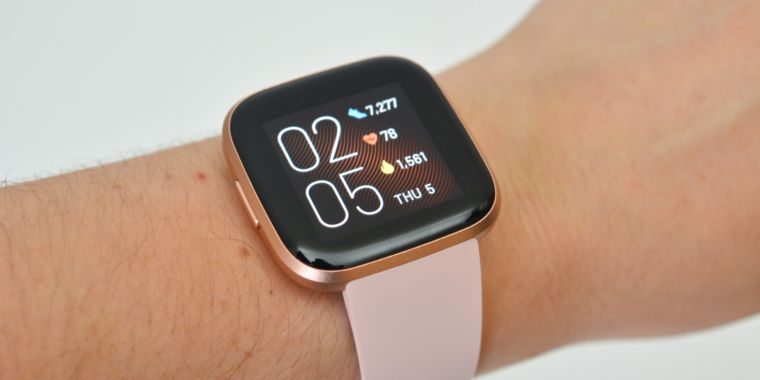
The Moto 360 third-generation, as eBuyNow is referring to the product, will cost $349.99 when it ships in December. It runs Wear OS, and like Fossil’s fifth-generation Wear OS watches, the new Moto 360 has a fully circular display, Qualcomm’s Snapdragon 3100 processor, 1GB of RAM, and 8GB of storage. It also has a heart rate monitor, GPS, and NFC for mobile payments. You’ll be able to get it in silver, gold, or black stainless steel finishes.
The 1.2-inch, fully-circular (no “flat tire” here) 360 x 360 pixel touchscreen is an OLED panel with an always-on option, and there are two buttons on the side of the watch. The top button also rotates, letting you scroll through the interface with a twist, just like the rotating crowns on Fossil watches or the Apple Watch. The lower button can be customized to launch an app of your choice.
The Moto 360’s 355mAh battery charges on the included cradle, and eBuyNow says it can go from dead to fully charged in just sixty minutes, which is considerably faster than most other smartwatches on the market right now.
In terms of design, the 52g Moto 360 is smaller than some other Wear OS watches, but it’s not as compact as the smaller Samsung Galaxy Watch Active 2 or the 40mm Apple Watch. It’s design is modern, but it’s still chunky and thick and will dwarf smaller wrists. The lugs in particular remind me of the 2nd-gen Moto 360 that Motorola produced. The latest model also suffers a bit from a generic look — it’s hard to tell that this is any different from the many Fossil smartwatch designs unless you notice the Motorola batwing logo on the crown.
The OLED display is also not as vibrant or bright as Samsung or Apple’s. Despite it having a relatively high resolution, the screen looks visibly pixelated compared to the others. It also has a significant border around it that makes the screen look smaller than it actually is. The unit that we were able to use for a few days before the official announcement is a pre-production model, but performance is on par with other Wear OS devices that have 1GB of RAM. It’s certainly not as responsive as an Apple Watch or Galaxy Watch, but it’s not frustratingly laggy to use either.
At $350, the Moto 360 is one of the most expensive Wear OS watches on the market, and it costs more than Samsung’s latest models. It does come with two straps — a leather one and a rubber one — and its fit and finish is good. But at its core it’s still a Wear OS device, which puts it at a disadvantage compared to other smartwatches. It’s not really pushing the envelope with new technology or a fresh design, but if you were hoping the Moto 360 would rise from the grave as an updated Wear OS watch, you won’t be hugely disappointed.
The new Moto 360 will be available for preorder in November at moto360.com and will hit retailers in December.
Vox Media has affiliate partnerships. These do not influence editorial content, though Vox Media may earn commissions for products purchased via affiliate links. For more information, see our ethics policy.
This morning, we're learning the punctuation for Apple's most professional set of AirPods and preparing for the launch of Apple TV+ on Friday. We have another new Star Wars trailer to watch for The Mandalorian, and Uber's speedy food delivery drone is ready to show off all of its rotors.
Later today we'll learn more details about HBO Max, and Apple TV+ launches November 1st, so how can Disney keep our attention on its streaming service? A flashy new The Mandalorian trailer with even more rambling voiceover from Werner Herzog will just about do it and provide a good reminder that Disney+ is about to launch on November 12th.
In other Star Wars news, the team of David Benioff and D.B. Weiss is officially off a planned trilogy of movies. We were expecting to see the first one in 2022, but the former Game of Thrones showrunners are apparently far too busy with work related to their $200+ million Netflix deal.
To little fanfare, Apple has snuck out its AirPods sequel, and they're shorter with even more features crammed inside. The main one is noise cancellation, with two microphones on each earbud, and software that continuously adapts the level of active noise cancellation to your ears -- monitoring up to 200 times per second. One microphone keeps tabs on ambient noise, and the other faces inward to pick up any additional sound that may remain. These upgraded buds are also IPX4 rate, so they should hold up just fine to sweat during your workouts. The AirPods Pro will ship on October 30th for $249.
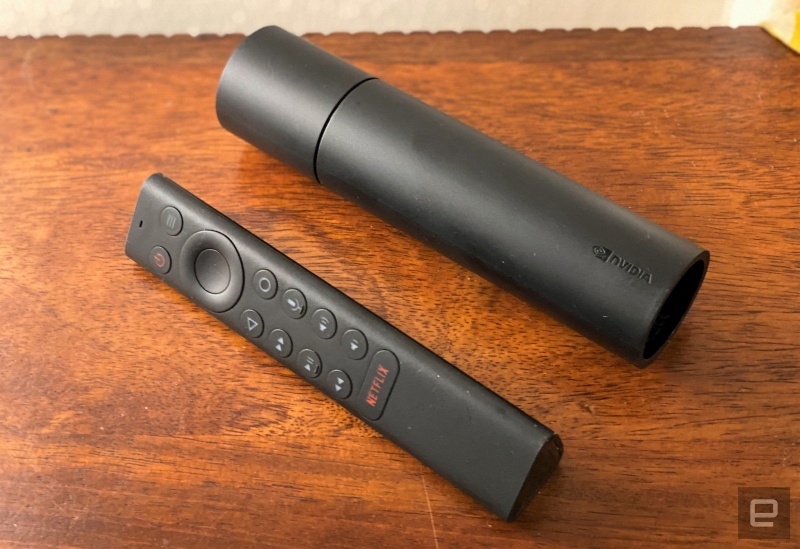
After a slew of leaks, the $149 Shield TV and $200 Shield TV Pro are on sale for you to buy right now. Besides an odd cylindrical shape for the cheaper device and a funky triangular remote, they feature Dolby Vision and Atmos decoding support plus AI-powered upscaling, all powered by a Tegra X1+ chip inside.
The latest update to iOS 13 is here, and it adds the "computational photography" feature, Deep Fusion, which is Apple's answer to Google and Night Sight. It takes advantage of machine learning and image stacking to render each pixel of a photo optimally. You'll likely see the benefits of Apple's new approach most in less-than-ideal lighting conditions, but it should help to improve all your photos. The update also adds 70-or-so new emoji, and if you have a HomePod, it's ready to recognize voices for multiple people in the home and handle audio Handoffs with iPhones.
Intel has revealed that its special edition Core i9-9900KS processor will be available on October 30th at a recommended price of $513. If you recall, this is really a top-binned version of the 9900K, which can reach a 5GHz turbo speed across all eight cores rather than one and hit a base speed of 4GHz instead of 3.6GHz.
The ride-hailing company, which has been expanding its repertoire recently, unveiled a new design for its food-delivery drone at the Forbes 30 under 30 Summit. Uber's drone design has rotating wings with six rotors "for increased speed and efficiency" and can carry meals for up to two people. The idea is that it would carry food quickly from a kitchen to somewhere else (like the conveniently located and easily accessible parking lot that so many restaurants lack) where a driver would grab the package and complete the delivery.
All products recommended by Engadget are selected by our editorial team, independent of our parent company. Some of our stories include affiliate links. If you buy something through one of these links, we may earn an affiliate commission.