Kamis, 02 Januari 2020

LG's new rollable OLED TV unfurls from the ceiling - Engadget

Sponsored Links

LG

Last year at CES, LG Display was all about the Signature Series OLED TV R, a 65-inch television that rolls up from a brushed aluminum base. At CES 2020, LG will unveil the latest iteration of its rollable TV line, a 65-inch, UHD OLED display that rolls down from the ceiling (though hopefully not only brushed aluminum ones). LG says the screen "can be pulled down when desired and rolled up when not in use," maximizing space.

This small change wasn't as simple as flipping a roll-up TV upside-down. LG Director of New Product Development Tim Alessi told CNET last January, "The first model of rollable OLED was designed to roll up only. Even if a professional were to figure out a way to hang it from the ceiling, there is no mechanism to re-orient the picture, so it would appear upside down. It's also likely that mounting it from an 8-foot ceiling would result in the panel being too high for comfortable viewing anyway."

There are no specifics yet regarding how LG has resolved the ceiling-height issue, but things should become clear at CES 2020 next week.

LG is bringing a handful of other new displays to the show, including three designed specifically for flight: a series of 55-inch OLED video walls for airplane cabins; a 55-inch Full HD Transparent OLED display that acts as an aisle partition and screen; and a 65-inch UHD Bendable OLED screen that's flexible at both ends, designed specifically for first class.

LG airplane displays for CES 2020

For more grounded consumers, there's the 88-inch 8K Cinematic Sound OLED display with an 11.2 channel system, and the 77-inch UHD Film Cinematic Sound and Wallpaper OLED with a wafer-thin screen. The sound systems are embedded into both of these displays. In automotive tech, LG will show off its Plastic OLED displays in a variety of sizes. And finally, for commercial spaces, there are LG's interactive in-TOUCH displays, including an 86-inch LCD screen that acts as an electronic whiteboard, with the ability to read four pens simultaneously.

LG previously revealed a few non-display gadgets it'll bring to CES 2020, including an indoor vegetable cultivator and AI-driven soundbars.

All products recommended by Engadget are selected by our editorial team, independent of our parent company. Some of our stories include affiliate links. If you buy something through one of these links, we may earn an affiliate commission.
Comment
Comments
Share
Tweet
Share
Save

Let's block ads! (Why?)


https://news.google.com/__i/rss/rd/articles/CBMiSmh0dHBzOi8vd3d3LmVuZ2FkZ2V0LmNvbS8yMDIwLzAxLzAyL2xnLXJvbGxhYmxlLXR2LWNlcy0yMDIwLW9sZWQtZGlzcGxheXMv0gFOaHR0cHM6Ly93d3cuZW5nYWRnZXQuY29tL2FtcC8yMDIwLzAxLzAyL2xnLXJvbGxhYmxlLXR2LWNlcy0yMDIwLW9sZWQtZGlzcGxheXMv?oc=5

2020-01-02 06:00:25Z
CAIiELM0RRocBz4GGNoWUPTwmDgqGAgEKg8IACoHCAowwOjjAjDp3xswicOyAw

Rabu, 01 Januari 2020

How we survive the surveillance apocalypse - SFGate

"Go, go gadgets" has long been the attitude in my house. Perhaps yours, too: A smartphone made it easier to stay in touch. A smart TV streamed a zillion more shows. A smart speaker let you talk to a smart thermostat without getting out of bed. That's progress, right?

Now I've got a new attitude: It's not just what I can get out of technology - I want to know what the technology gets out of me.

For the past year, I've been on the trail of the secret life of our data. What happens when you put your iPhone to sleep at night? Does Amazon's Alexa eavesdrop on your family? Who gets to know where you drive - and where you swipe your credit card?

Trying to get straight answers has been, literally, a full-time job. I've digested the legal word salad of privacy policies, interrogated a hundred companies and even hacked into a car dashboard to grab my data back. There are lots of stories about online threats, but it feels different watching your personal information streaming out of devices you take for granted. This year I learned there is no such thing as "incognito." Just stepping out for an errand, I discovered, lets my car record where I shop, what I listen to and even how much I weigh.

Learning how everyday things spy on us made me, at times, feel paranoid. Mostly, my privacy project left me angry. Our cultural reference points - Big Brother and tinfoil hats - don't quite capture the sickness of an era when we gleefully carry surveillance machines in our pockets and install them in our homes.

With each discovery, I've looked for ways to change my own relationship with technology. I've stopped installing new smart-home devices that let corporations or police log what's happening at my house. I switched web browsers and credit cards. When possible, I use a pseudonym or a throwaway email address.

Still, I'm going to level with you. After a year of wrestling my data from corporate America, I hardly feel in control. Being paranoid isn't enough to save us in the age of surveillance.

But no, privacy isn't dead. A path to reclaiming it - fuzzy and almost too late - is starting to emerge. We just have to be angry enough to demand it.

- Data is power

While we're busy living increasingly online lives, it's hard to know what's at stake in our data.

Most of the headlines focus on leaks and the unintended consequences of data collection, like hackers stealing credit card numbers. You hear about creepy but vague violations, like when Apple and Amazon hired people to review recordings taken from their voice assistants. In a world where so many others are collecting our personal data, it's legitimate to worry whether they're doing enough to protect it.

But there's a more fundamental problem: Why is so much of our information being collected in the first place?

When I began my privacy project, I learned something about the now-ubiquitous Alexa I hadn't quite understood when I first brought home an Echo speaker. Every time Amazon's artificial intelligence activates, it keeps a recording. Amazon had four years of my family's conversations.

There's more: Amazon also keeps reports on appliances you connect to Alexa - in my smart home, every flip of a light switch or adjustment on the thermostat. Last week, Amazon reported that Alexa users received "millions" of doorbell and motion announcements during the 2019 holiday season, "from carolers to delivery drivers and holiday guests." Surveilling that many homes is a thing the company brags about. (Amazon CEO Jeff Bezos owns The Washington Post, but I review all technology with the same critical eye.)

Amazon isn't building its dossier on you just to be creepy. It wants your voice and your data to train its AI, the technology it hopes will rule our future economy.

While we've been wondering at the new capabilities of connected apps and devices, many of them have been quietly turning our private experiences into their raw materials. These companies act like the data belongs to them, rather than us. Largely unhindered by law, a hidden economy of data brokers gobbles every data morsel it can. Author Shoshana Zuboff gave this data grab a sharp name that I hope sticks: "surveillance capitalism."

There are lots of ways your data can, and will, be used against you. Governments frequently compel companies to hand over what they know. Tracking your credit card lets retailers know how much you're willing to pay. Tracking what you watch on TV lets politicians micro-target your fears. Tracking your web surfing lets marketers glimpse your desires - to get you to buy things you may not really need.

These corporations understand that data is a form of power. It's time to take ours back.

- The arms race

Opting out is more easily said than done.

I tried putting my Alexa speaker on mute, but that defeated the purpose of having a voice-operated assistant in my house. Turning it back on, Amazon would let me delete its recordings of my voice and smart-home activity - but only after the fact, and if I remembered.

Around every corner in my connected life lay one of these traps. Data-collecting companies, especially when they're trotted in front of lawmakers, like to say they give us "control." But often it's a false choice between forgoing some new capability vs. letting them mine your life. That's not how technology has to work.

In my privacy project, I found that every swipe or tap of a credit card lets as many as a half-dozen kinds of companies grab information about what, where and how much we spend. Since I can't live without a credit card, I switched most of my purchases to the new Apple Card, which restricts its bank, Goldman Sachs, from selling customer data.

That's good, but Apple didn't do anything to stop data collection by the Mastercard network its card runs on, or by retailers and point-of-sale system operators. Sometimes companies say they protect our privacy, but I find they often use a narrow definition of privacy. Same for your smartphone: Apple brags, "What happens on your iPhone stays on your iPhone," but doesn't stop app makers from sending your personal information to third-party tracking companies.

Facebook, Google and lots of other data-collecting companies offer privacy control panels that hardly anybody ever uses. I don't blame anyone for keeping away: I've tried adjusting the terrible default settings for Google, Facebook and Amazon, but the companies keep changing the controls and the types of information they collect. Using a virtual private network, or VPN, doesn't do much to stop them from grabbing data from a device you use while logged in to one of their services.

The arms race is exhausting. After I discovered how much Google's Chrome let tracking cookies ride shotgun while I browsed the web, I switched to Mozilla's Firefox, which has default cookie-tracking protection. But even it struggles to defeat a newer, more pernicious form of tracking called fingerprinting, already used on a third of the most-popular sites.

The truth is, most of us don't have the time or expertise to defend ourselves from the smartest minds in Silicon Valley, many of whom say they want to improve the world but hooked their own financial success onto grabbing as much data as possible.

- Data co-pilots

We won't regain our privacy if we leave it up to individuals. If we're going to survive the age of surveillance, we're going to need help.

That starts with laws. Privacy isn't just an individual right. It's a public good that, when done right, keeps everyone safe, whether they're paying attention or not. This ought to be obvious: Our data shouldn't have a secret life.

America doesn't have a broad privacy law, like Europe's General Data Protection Regulation, or GDPR. But after years of U.S. lawmakers just talking about data, we're starting to see some action. So far, that has come mostly in the form of regulatory fines. We should demand laws that not only require companies to come clean about what they're taking but also place some limits on it.

Starting in January, California will bring us closer to a general data law with its new California Consumer Privacy Act, or CCPA. It treats our data like we own it, and gives California residents new powers to demand that companies show us what they've collected and who they share it with. It might force some (but not all) of the companies I investigated in my privacy project to open up.

Transparency means that vigilant citizens - and pushy journalists - can hold companies accountable through public debate about what sorts of data collection are acceptable. Transparency is also good for business: It helps consumers trust what's happening behind the digital curtains.

But better seeing our data gets us only so far. My inbox is already flooded with updated privacy policies and data disclosures from companies rushing to comply with the CCPA. Managing all the data I generate is more than even I can handle.

When we're sick, we go to a doctor. To keep our computers safe, we install anti-virus software. We rely on professionals to help out with lots of complex aspects of modern life: Why not have professionals help with data, too? Call them your privacy co-pilot.

A fledgling privacy service called Jumbo shows what's possible. From your phone, it logs into Google, Facebook, Amazon and others and spruces up your privacy on your behalf. In clear language and colorful illustrations, it explains the real choices we have and makes recommendations like you'd get from a really clued-in friend. It's my favorite app of the year.

The first time I used Jumbo, I was shocked that it identified a half-dozen privacy settings for Facebook and Google that even I had missed. Now the app goes in on a regular basis and deletes my Alexa recordings, Google data and Twitter posts, reducing the data trail I leave behind me.

Right now Jumbo is tiny and faces an uphill battle when it adds a paid version in the coming months. But the privacy co-pilot market is burgeoning with new ideas, joining the likes of password managers and security-focused WiFi routers. California's new law smartly carves out protection for third parties to manage our data for us. Now we need clear professional rules for how these companies represent us and prove their trustworthiness.

I don't know exactly how this will evolve. But we're more likely to win when there are laws that stop data collection from being a secret - and when we have companies fighting to protect our privacy, not just exploit it.

Let's block ads! (Why?)


https://news.google.com/__i/rss/rd/articles/CBMiX2h0dHBzOi8vd3d3LnNmZ2F0ZS5jb20vYnVzaW5lc3MvYXJ0aWNsZS9Ib3ctd2Utc3Vydml2ZS10aGUtc3VydmVpbGxhbmNlLWFwb2NhbHlwc2UtMTQ5NDMxMTAucGhw0gEA?oc=5

2020-01-01 12:55:00Z
52780529129569

What could your future smartphone look like in 2030? - TechRadar

It’s the end of the decade, and you’re seeing plenty of retrospectives rounding up the last ten years of smartphones, and tech in general – but what about the future, and the tech advances it might bring? How could smartphones change in the next ten years?

We’ve looked at a few trends of the 2010s, and in particular 2019, and guessed at where these trends could go by the year 2030. We’ve looked at everything from foldable phones to USB ports and 6G.

It’s worth pointing out that this speculation could end up being totally, totally off, as guessing tends to be, so come 2030 the smartphone industry could be totally different to how we suggest here.

Foldable phones in the future

The foldable Samsung Galaxy Fold

The foldable Samsung Galaxy Fold (Image credit: TechRadar)

Foldable phones really entered the public eye in 2019, with multiple devices like the Samsung Galaxy Fold and Motorola Razr 2019 launched (although the latter wasn’t available to buy during the year), and they’re only going to get more popular as more devices are released.

So, by 2029, could we all own foldable phones? Well, that depends on how phone companies navigate the next few years. At the moment, foldable phones are largely considered interesting gimmicks, but ones that most people (other than tech fans) wouldn’t consider buying as their next phone.

This is because of how pricey they are, and also because software hasn’t been developed that really makes the most of the form factor.

So if the next few years brings foldable phones that are affordable and, more importantly, vital for certain functions, people will leap on board. Ten years is a long time, and it’s highly likely that foldable phones will become affordable and useful pretty soon, but that depends on how willing people are to ditch the tried and trusted form factor of ‘normal’ phones.

The 5G LG V50 ThinQ

The 5G LG V50 ThinQ (Image credit: LG)

5G is already out and about in several countries, although at the close of 2019 it still remains to be seen how long it will take for people to get on board with the tech. Its added speed doesn’t mean much for people in high-speed areas, where 4G is already faster than most people need, and no apps have been launched that really make the most of the high-speed connection.

But in the coming years, companies will launch more 5G phones and fewer 4G phones, following the pattern of every new generation of connectivity, to the point where it’s ‘normal’ to buy a 5G phone, just as you’d buy a 4G phone now. 

That’s less because people need a high-speed phone, and more just because most of the devices on shelves will be 5G, with few (or no) 4G options

Towards the end of the decade, we could even see mentions of 6G (Donald Trump has already been demanding it), but we’ll have to see how much people take to 5G, and if we really need even faster connections, before knowing for sure.

The future of front-facing cameras

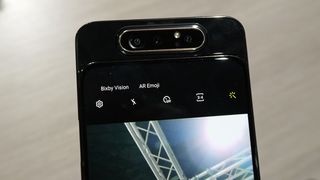
The Samsung Galaxy A80 with a pop-up array 

The Samsung Galaxy A80 with a pop-up array  (Image credit: Future)

One of biggest differentiating features between different smartphones nowadays is the front-facing camera – does your phone have a big notch like an iPhone, a teardrop notch like plenty of phones use, a punch-hole cut-out like many Samsung phones, a pop-up like several companies have embraced, or something else entirely?

Well, it’s possible that future phones will have none of the above – the front-facing cameras could actually be under the display. Oppo has shown off this tech already, and it’s likely other companies are working on it too. This method removes the front snapper from view, so it won’t take up screen space but also won’t take up lots of internal space either (like pop-ups do).

So what about the camera itself? Towards the end of 2019, we've seen a few smartphones use two front-facers, one to take a picture and a secondary snapper for depth sensing, for more accurate background blur.

In the next few years, and especially into 2030, we’d expect this trend to get more established – selfies are one of the main types of picture you’ll take on your phone after all. Phones could even introduce an ultra-wide front-facing camera for group selfies, with a depth sensor or software that can create background blur for a whole group.

Goodbye ports

An Oppo prototype with no ports

An Oppo prototype with no ports (Image credit: Future)

Many phones are dropping the 3.5mm headphone jack already, and those things will be ancient history by 2030 – it would be a surprise if many phones even in 2020 kept the port. As more users flock towards wireless headphones over wired ones, the amount of phone users who need to physically plug their headphones into their smartphone will reduce, and in ten years, after years of advances in Bluetooth technology, we’d be surprised if many people use wired headphones at all.

More uncertain is the presence of a USB port to plug your phone into a computer or charger. We’ve already seen a few prototype phones without this port, as handsets can rely on wireless charging to power up and Wi-Fi, mobile data or NFC options to send information and files to a computer.

It’s likely as wireless chargers get more popular and, more importantly, faster at powering up your device, people will rely less on physical wires, making a port more and more redundant. In that way, it echoes the use of wireless headphones, and in 2030 portless smartphones could be the new normal.

More rear cameras?

The Nokia 9 PureView with five rear cameras

The Nokia 9 PureView with five rear cameras (Image credit: Future)

While you may think the future will bring you phones with plenty of smartphone cameras, far more so than now, that might not end up being the case: there are only so many different kinds of lens, so we’ll soon reach a point where adding more lenses adds nothing new.

No, in fact, the real change will likely be megapixel count – at the end of 2019 the highest resolution in a smartphone is 108MP in the Xiaomi Mi Note 10, but it looks like a number of phones in 2020 are gearing up to match that. In ten years, though, that number could be through the roof.

Well, at least five times nearer the roof. Scientists have estimated that the human eye sees roughly 576MP, but that’s assuming perfect vision with an image right by your face, so if you’re looking at a phone at arm’s length and don’t have flawless vision, that number is higher than you’ll ever need.

So people don’t need cameras with incredibly high megapixel counts, and it would be a surprise if phone companies decided to even reach 576MP. Saying that, advances in megapixel count will almost certainly be more pronounced in 2030 than the number of rear cameras.

Let's block ads! (Why?)


https://news.google.com/__i/rss/rd/articles/CBMiUmh0dHBzOi8vd3d3LnRlY2hyYWRhci5jb20vbmV3cy93aGF0LWNvdWxkLXlvdXItZnV0dXJlLXNtYXJ0cGhvbmUtbG9vay1saWtlLWluLTIwMzDSAVZodHRwczovL3d3dy50ZWNocmFkYXIuY29tL2FtcC9uZXdzL3doYXQtY291bGQteW91ci1mdXR1cmUtc21hcnRwaG9uZS1sb29rLWxpa2UtaW4tMjAzMA?oc=5

2020-01-01 13:00:00Z
52780525641475

What to expect from phones in 2020: Foldable, 5G, killer cameras - CNET

samsung-galaxy-note-10-plus-17
Angela Lang/CNET

Phones just had a hell of a year. 2019 was the staging ground for major trends that will continue to dominate 2020 with devices like the Galaxy S11 and Huawei P40 Pro. We saw the first 5G phones that can command wildly fast data speeds, though we don't recommend buying them just yet. We also saw foldable screens that bend in half: the historic Samsung Galaxy Fold, Huawei Mate X and Motorola Razr flip phone.

In the past year, batteries charged faster and lasted longer, operating systems added new bells and whistles (dark mode!) and digital assistants got smarter. Phone cameras embraced new sensors and enhanced image capture, from seriously impressive periscope zoom technology to astrophotography in the Pixel 4.

Looking forward, we'll see these features beefed up and gain new tricks -- cameras with oodles of megapixels, phones with outrageously large batteries and screens that give you smoother graphics. We'll see more 5G in more phones. We'll also get some clarity over the role of foldable phones, if they have one at all beyond this fascinating period of experimentation.

Here are the most important things you have to look forward to with this year's phones.

5G becomes more mainstream in 2020

5G networks kicked off in 2019, and at least a handful of phones had to be there to support them. Most of these devices were variants of premium models, with boosted price tags and limited 5G networks to work with. 

There were a few success stories. This past September, Samsung said it sold 2 million 5G phones in its home country of South Korea, and some brands worked on cheaper 5G phones like the $520 Xiaomi Mi 9 Pro. But on the whole, there was much ado about nothing, especially since the chips inside aren't terribly efficient yet and tend to chew through battery when you're actually using a 5G connection. 

5G phones also have a tendency to overheat when it's hot out, with the 5G connection shutting down to keep the phone from reaching dangerous internal temperatures.

Now playing: Watch this: Galaxy S11 is apparently going to be big. Very big

6:33

Despite 2019's growing pains, 5G is still inevitable. In countries where carriers are building out their 5G networks, expect every premium phone to be either 5G-ready or have a 5G variant. For example, Samsung's Galaxy S11 could be one of the first to bring 5G to many more people. 

Once 5G networks become more widespread, phones will be able to access significantly higher data speeds and more responsive service, which could mean:

  • Lighting-fast downloads of large files, like Netflix shows to watch offline.
  • Seamless video calls.
  • Amazing graphics on streaming real-time games and AR experiences.
  • A split-second advantage in responsiveness when shooters like Fortnite.

Get to know the different flavors of 5G -- and which real-world benefits will actually come to you. And here's why the first cheap 5G phones may not be very good.

timberwolf-2019-2733

Will it fold? Phone screens that bend in half are still in question.

Angela Lang/CNET

Foldable phones get real

If 2019 was the year of seeing foldable phones come to life, then 2020 is about determining if phone screens that bend are a potential future or a gimmick destined to be forgotten like 3D displays. 

Samsung, Motorola and Huawei have launched foldable phones that work, each with their own design. The Galaxy Fold gives us a book design that opens into a tablet. The even larger Mate X has one big wraparound screen around the outside of the device, which can be used three different ways. And the Motorola Razr is a small phone flips up vertically to reveal a tall, narrow display within.

Foldable phones seek to give you a larger screen in a much smaller body. In 2019, they're expensive, ranging from $1,500 for the totable Razr to over $2,000 for the Galaxy Fold and roughly $2,400 for the Mate X.

That's at least 50% more expensive up front than you'd spend on a premium superphone, like the $1,000 iPhone 11 Pro. Consider, too, that foldable phone screens are made of plastic, a more fragile material than glass. They're more prone to scratches and damage from too much direct pressure.

We know that the Fold, Razr, and Mate X will get company in 2020 and beyond. Phone-makers like LG, Xiaomi and TCL have been vocal about experimenting with foldable designs, like this foldable device that bends in three places to open into a 10-inch tablet. 

Samsung already teased a new foldable in the works, a vertical flip phone reminiscent of the Motorola Razr. Rumors also suggest that Samsung is working on the Galaxy Fold 2 for August 2020.

Photography continues to rise

Camera quality is one of the top three reasons people buy one phone over another, alongside screen preference and battery life, according to a consumer study by research firm Kantar Worldpanel.

Mobile phone photography made deep strides in 2019, with advancements in telephoto quality and advanced image processing. For example, telephoto and/or wide-angle sensors have now become standard for high-end phones. The Huawei P30 Pro is notable for its periscope lens that achieves incredible zoom results using a combination of optical and digital zoom.

Phone brands are also using sophisticated sensors and post-processing to achieve shots that were previously only achievable on DSLR cameras. The standout was Google Pixel 4's astrophotography mode, which is capable of taking sharp photos of the starry sky, assuming you're in a dark enough place to begin with. It's astounding.

In 2020, new phone processors will be able to support up to 200-megapixel cameras, and advancements will come to telephoto and ultra-wide angle photography, particularly with more top-tier phones using 5x optical zoom. Slow-motion and high-resolution video will also get a boost, thanks to more powerful processors.

120Hz screens come to the masses

Screens on high-end phones will continue to be crisp, detailed and saturated with color. But also expect them to get "faster," with refresh rates of 120Hz -- the Galaxy S11 is rumored to build the feature in.

The standard refresh rate is currently 60Hz. That indicates the number of times the images on your display update per second. So, 60Hz equals 60 refreshes, and 120Hz equals 120 refreshes per second.

A faster refresh rate makes graphics look smoother, which is important for fast-paced and graphically heavy games. But It also enhances graphics for 4K video, screen animations and even scrolling through a web page or your app drawer.

google-pixel-4-1031

The Pixel 4 has a "fast" screen... if you turn the feature on.

Angela Lang/CNET

A high refresh rate could also help improve the detail or responsiveness of AR graphics, an area that's got a lot of potential, but is mostly used in games right now, like Pokemon Go, Minecraft Earth and Harry Potter: Wizards Unite.

Right now, only a handful of phones have 90Hz or 120Hz screens built in, like the OnePlus 7T and Google Pixel 4. The setting is optional, because increasing the screen refresh rate by 50% (90Hz) or 100% (120Hz) takes a toll on your battery.

Fast charging will get faster

Your phone is only as good as its battery, because if it runs out of charge, or you're dashing for the nearest outlet, then your phone's no good to you. 

A bigger battery that holds more charge is one solution. Fast-charging is another. The idea is that if you can't get everything you need out of your battery, you can at least give yourself most of one in as little as 30 minutes.

apple-iphone-battery

The iPhone 11 Pro comes with an 18-watt fast-charger in the box.

Angela Lang/CNET

For example, the Galaxy Note 10 Plus comes with a 25-watt charger that fills up your empty battery in about an hour. It also works with a 45-watt charger that fills your battery up in half the time.

Apple, too, embraced fast-charging in 2019, with an 18-watt charger in the box for the iPhone 11 Pro and Pro Max. 

So it's pretty inevitable that fast charging and battery maintenance are going to become even more of a hot topic in 2020. The fastest fast chargers will start showing up as a matter of course, and we could potentially see Samsung start including 45-watt chargers in the box for its most expensive phones. 

At the very least, we might see Apple and other rivals try to close the gap with Samsung's 25-watt charger by introducing their own. Until we see how it all shakes out, here are six truths about fast charging and your phone's battery life.

High-end phones get more expensive

Phone prices have been on the rise in the last several years, with new camera features and larger screen sizes used to justify the hike in cost.

Enter 5G, foldable phone designs and even more camera, battery and processor enhancements and it's clear to see that prices will only go up, at least on the high end. We'll always see more moderate pricing for midrange phones, especially those that use older technology. 

Phones that are 4G-only, or which use a midrange 5G processor like the Snapdragon 765 chipset will also be able to dodge the steepest costs. But on the whole, expect 5G phones to cost more than 4G phones with the same parts. Also expect that affordable 5G phones will downshift specs in exchange for 5G support -- and they might not be all that good.

Let's block ads! (Why?)


https://news.google.com/__i/rss/rd/articles/CBMiWGh0dHBzOi8vd3d3LmNuZXQuY29tL25ld3Mvd2hhdC10by1leHBlY3QtZnJvbS1waG9uZXMtaW4tMjAyMC1mb2xkYWJsZS01Zy1raWxsZXItY2FtZXJhcy_SAWNodHRwczovL3d3dy5jbmV0LmNvbS9nb29nbGUtYW1wL25ld3Mvd2hhdC10by1leHBlY3QtZnJvbS1waG9uZXMtaW4tMjAyMC1mb2xkYWJsZS01Zy1raWxsZXItY2FtZXJhcy8?oc=5

2020-01-01 12:00:06Z
52780525641475

Samsung's QLED 8K TV will be one of the first certified by the 8K Association - Engadget

Sponsored Links

Samsung has fired a shot in a brewing 8K standards war by announcing that its 8K QLED TVs will be among the first to be certified by the fledgling 8K Association (8KA) sometime next year. That means the sets will hit a minimum 7,680 x 4,320 resolution (twice that of UHD), while peaking out at 600 nits of brightness and supporting HDMI2.1 and HEVC (H.265) standards. That could include models like Samsung's rumored bezel-free Q950T.

The certification is important, as Samsung will be able to promote its 8K TVs as being validated by the 8KA, complete with a logo. "Our goal is to provide consumers with the ability to easily identify premium 8K displays from other devices when making purchasing decisions," said Samsung Display VP Hyogun Lee.

While this might sound like a non-controversial announcement, there's a lot going on behind the scenes. At IFA 2019, LG made clear that it didn't think Samsung's 8K TVs conformed to a true 8K spec, even though it had the correct number of pixels, according to Forbes. It believes that Samsung's QLED pixels are not clearly distinguishable from one another, so the effective resolution is lower than 8K. Naturally, it thinks its own 88Z9 OLED and LM99 LCD TVs are sharper and do meet a true 8K standard.

LG's 88-inch 88Z9 OLED TV

While companies like Samsung, Panasonic and Hisense are part of the 8K Association, LG notably is not. Rather, it based its assertions on measurements from the International Committee for Display Metrology (ICDM). That group has devised a "contrast modulation" test that displays alternating one-pixel-wide white and black lines, then effectively counts the lines. The more that appear, the clearer the image on an 8K TV.

Experts on resolution both inside the Samsung camp and outside don't necessarily agree with this. The measurement doesn't take color data into account and Samsung said it set up its 8K TVs not by counting pixels but by looking at the actual image. And the ICDM recently made a statement that watered down LG's claims.

While standard disputes aren't that spicy, this information does matter to buyers. We'll all be relying on groups like the 8KA for 8K TV purchases, just as we did on the UHD Alliance for 4K sets. As such, it's important that they're neutral and subservient to consumers, not manufacturers. All that said, none of this will matter in the foreseeable future, as 8K sets are still crazy expensive and there's virtually no 8K content.

All products recommended by Engadget are selected by our editorial team, independent of our parent company. Some of our stories include affiliate links. If you buy something through one of these links, we may earn an affiliate commission.
Comment
Comments
Share
141 Shares
Share
Tweet
Share
Save

Let's block ads! (Why?)


https://news.google.com/__i/rss/rd/articles/CBMiZGh0dHBzOi8vd3d3LmVuZ2FkZ2V0LmNvbS8yMDIwLzAxLzAxL3NhbXN1bmdzLXFsZWQtOGstdHYtd2lsbC1iZS1vbmUtb2YtdGhlLWZpcnN0LWNlcnRpZmllZC1ieS10aGUtOC_SAWhodHRwczovL3d3dy5lbmdhZGdldC5jb20vYW1wLzIwMjAvMDEvMDEvc2Ftc3VuZ3MtcWxlZC04ay10di13aWxsLWJlLW9uZS1vZi10aGUtZmlyc3QtY2VydGlmaWVkLWJ5LXRoZS04Lw?oc=5

2020-01-01 11:36:09Z
52780532987789

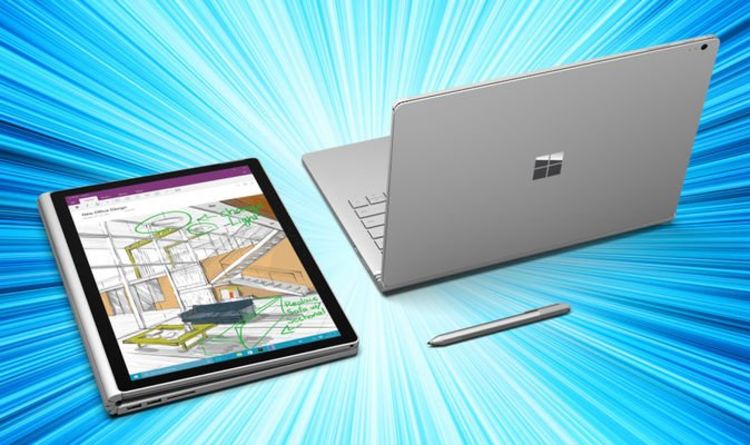
Windows 10 update will leave YOU with a HUGE bill as Windows 7 end of life arrives - Express.co.uk

Microsoft has been warning us that this day would come. And now, it’s almost here. Windows 7 end of life lands on January 14, 2020. After that deadline, Windows users running older versions of the desktop operating system will face a difficult choice – cough-up for a hefty bill to upgrade to Windows 10, or brace themselves for some dangerous risks on their home PC.

By ending support for the ageing Windows 7 operating system, which was first launched back in July 2009, Microsoft will stop rolling-out updates with new features, security updates or protections against malware. That means any issues with the software – or any new vulnerabilities discovered by cybercriminals – can be leveraged from indefinitely. Less serious, perhaps – but this also means any annoying bugs or glitches that crop-up will also be immortalised in the operating system.

If you’d like to benefit from the latest security protections and anti-virus solutions from Microsoft, you’ll have to update your machine to an operating system the Redmond-based company does support – namely, Windows 10. Although Microsoft has offered free upgrades to users running official versions of its operating systems in the past, that’s not possible at the moment.

We’ve heard from a number of loyal readers who swear there are still ways to upgrade to Windows 10 from Windows 7 for free using tools provided by Microsoft, however representatives from Microsoft tell us that its no-cost upgrade offer expired on July 29, 2016 and there is no officially sanctioned way to update your machine without paying.

The firm also says that for the vast majority of Windows 7 users, moving to a new device with Windows 10 preinstalled is the recommended path – not upgrading the operating system on the older hardware.

"Today’s PCs are faster, lightweight yet powerful, and more secure, with an average price that’s considerably less than that of the average PC over nine years ago," Microsoft said in an email sent to us.

MORE

If you’re still pretty fond of your old computer and don’t like the idea of upgrading the hardware simply to ensure that Microsoft supports the operating system that you’re using – it could be a costly update.

Those wanting to install Windows 10 Home edition on their current hardware will need to pay £119.99 which is licensed to one PC. And that's the cheapest available option.

The price to upgrade your PC spirals to £219.99 for Windows 10 Pro and a jaw-dropping £339 for Windows 10 Pro for Workstations. If you’re thinking about using the money from your Christmas cards from nan for a bit of summer sun – think again. At £219.99 for the upgrade to Windows 10 Pro, Microsoft’s argument about moving to a new notebook, with all the benefits of a new display, trackpad, keyboard, and most importantly of all, battery – makes a little more sense.

It’s unclear whether the US company will offer any kind of price cuts, discounts or promotions nearer to the final deadline. But as of now, you’re looking down the barrel of a pretty hefty bill if you want to upgrade.

It’s worth noting that Microsoft does offer some concessions around its Windows 10 upgrade. For example, people with accessibility issues are able to upgrade to the new operating system, which offers better support and a number of new features designed to make using the software easier for these users, without paying the upgrade fee.

Explaining more about the end of Windows 7 and why it is no longer offering updates, the US firm said: "Microsoft made a commitment to provide 10 years of product support for Windows 7 when it was released on October 22, 2009. "When this 10-year period ends, Microsoft will discontinue Windows 7 support so that we can focus our investment on supporting newer technologies and great new experiences.

"The specific end of support day for Windows 7 will be January 14, 2020. After that, technical assistance and software updates from Windows Update that help protect your PC will no longer be available for the product.

"Microsoft strongly recommends that you move to Windows 10 sometime before January 2020 to avoid a situation where you need service or support that is no longer available.

"You can continue to use Windows 7, but after support has ended, your PC will become more vulnerable to security risks and viruses. Windows will continue to start and run, but you will no longer receive software updates, including security updates, from Microsoft."

Let's block ads! (Why?)


https://news.google.com/__i/rss/rd/articles/CBMicmh0dHBzOi8vd3d3LmV4cHJlc3MuY28udWsvbGlmZS1zdHlsZS9zY2llbmNlLXRlY2hub2xvZ3kvMTIyMjc5My9XaW5kb3dzLTEwLVVwZGF0ZS1CaWxsLVByaWNlLVdpbmRvd3MtNy1FbmQtT2YtTGlmZdIBdmh0dHBzOi8vd3d3LmV4cHJlc3MuY28udWsvbGlmZS1zdHlsZS9zY2llbmNlLXRlY2hub2xvZ3kvMTIyMjc5My9XaW5kb3dzLTEwLVVwZGF0ZS1CaWxsLVByaWNlLVdpbmRvd3MtNy1FbmQtT2YtTGlmZS9hbXA?oc=5

2020-01-01 10:17:00Z
52780525502900

Flip Phones Are Making A Comeback - Hackaday

If you’re the kind of person who hates this new generation of smartphone users and longs for a nostalgic past, you’re not far from the new target demographic for many commercial phone manufacturers. Major phone companies like Motorola and Huawei have been developing foldable versions of conventional smartphone designs, intended to be more versatile while maintaining the same functionality as their less flexible counterparts.

It’s certainly gimmicky, but phones like the Samsung Galaxy Fold, the Motorola Razr, and the Huawei MateX are elegant from an engineering perspective. Developing a seamless interface experience, maximizing surface area for functionality, and maintaining the same nostalgic flip phone aesthetic while making use of familiar smartphone features isn’t an easy design process.

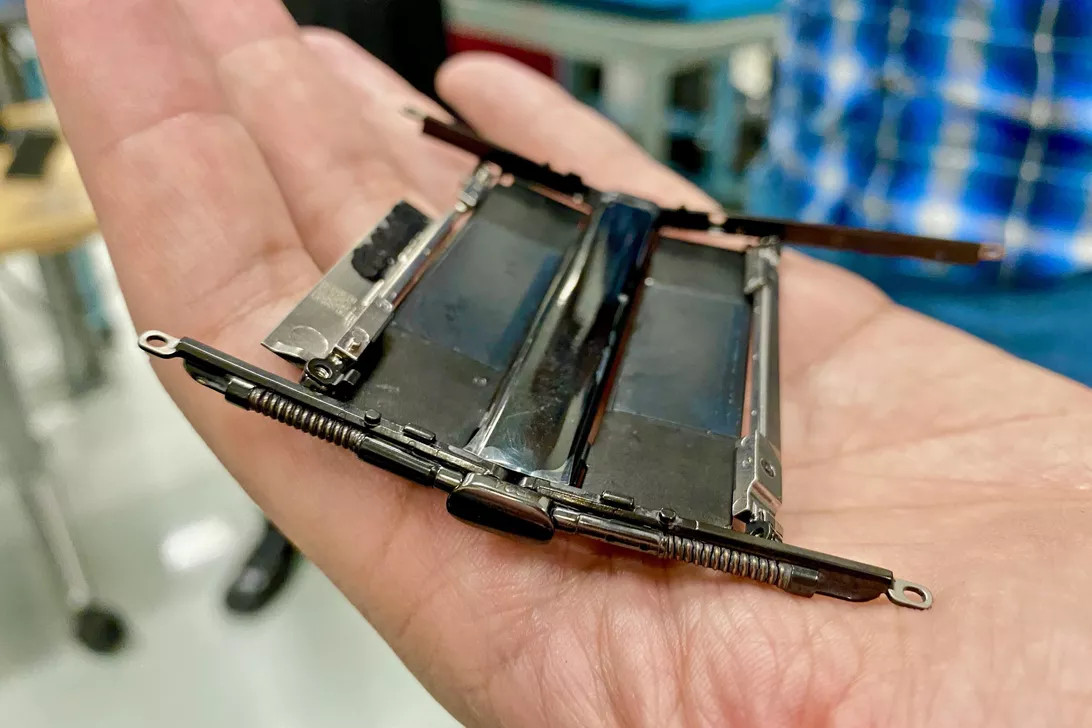
Motorola RAZR hinge shown by CNET’s Patrick Holland during a tour of their labs.

For the Razr, a hinge system that takes up about a third of the phone’s internal space allows the OLED display to have no noticeable binder line. Rather than curving like a piece of paper, it forms a teardrop shape that prevents the screen from creasing and being damaged. Springs and pistons below the surface move small places underneath where the user will be tapping – folded in, the plates slide away. It’s an interesting effect, although as you can see in the banner image, it doesn’t quite achieve optically flat perfection.

In order to ensure that the screen doesn’t overheat as it bends, it is made up of microlayers sandwiched together. To balance weight, the circuits and battery is split into two, operating on each half of the device, an unusual design choice for smartphones. Placement of the array of radios and antennas is also a challenge since they can’t be too close to each other or the processor, which can interfere with signal transmission.

Other devices like the Royale Flexpai are more so proof-of-concepts making use of flexible screens and batteries, rather than capturing the aesthetics of a flip phone generation — but who doesn’t want their smartphone to unfold into a tablet when needed? The future of smartphone technology is looking interesting, and we’ll be sure to see even more iterations of flexible displays in the near future.

Let's block ads! (Why?)


https://news.google.com/__i/rss/rd/articles/CBMiQmh0dHBzOi8vaGFja2FkYXkuY29tLzIwMTkvMTIvMzEvZmxpcC1waG9uZXMtYXJlLW1ha2luZy1hLWNvbWViYWNrL9IBAA?oc=5

2020-01-01 03:01:00Z
52780525641475